
Switzerland, a country at the heart of Europe, stands out for its exceptional linguistic diversity. With four official languages, this small Alpine Swiss state offers a unique and fascinating linguistic landscape. Understanding the switzerland main language question requires exploring a rich multilingual heritage — because there is not just one, but four national languages officially recognized by the Swiss Confederation. Let’s discover the particularities of Swiss multilingualism and its concrete impact on everyday life.
« La Suisse ne constitue pas une nation au sens traditionnel du terme — elle est une nation de volonté (Willensnation), unie par des valeurs communes malgré quatre langues nationales distinctes. »
— Federal Chancellery of Switzerland / eda.admin.ch
Badges rapides :
Régions : 🟢 Suisse alémanique · 🟡 Suisse romande · 🔵 Suisse italienne · 🟣 Romanche (Graubünden)
Switzerland’s four national languages: a rich linguistic heritage
The Swiss Confederation officially recognizes four national languages: German, French, Italian and Romansh. This linguistic diversity is deeply rooted in the country’s history and culture, shaped over centuries of cantonal alliances and regional autonomy. Each of these languages has its own territory, traditions and regional characteristics — and each reflects a distinct cultural identity within a unified Swiss nation.
German is the switzerland main language by number of speakers. It is spoken by around 62.6% of the population, mainly in the northern and central regions of the pays. However, it is important to note that Swiss German, or Schweizerdeutsch, differs considerably from standard German (Hochdeutsch). Cantons such as Zurich, Bern, Lucerne and Basel all fall within this German-speaking zone, which forms the economic backbone of the swiss nation. Zurich, the largest Swiss city and a global financial hub, is fully German-speaking and serves as a gateway to Suisse alémanique.
French, the second most widely spoken language, is used by 22.9% of the Swiss population. It is mainly spoken in the western part of the pays, known as Suisse romande. The cantons of Geneva, Vaud, Neuchâtel and Jura are entirely francophone — and français remains the dominant language of culture, politics and daily life there. French-speaking Switzerland also attracts millions of visitors each year thanks to its destinations along Lake Geneva and its proximity to the Alps.
Italian, the third national language, is spoken by 8.2% of the population. It is mainly spoken in the canton of Ticino and in certain valleys in southern Graubünden. The Italian-speaking Swiss enjoy a Mediterranean atmosphere distinct from the rest of the country — a characteristic that myswitzerland.com highlights as one of the most surprising aspects of the Swiss experience.
Finally, Romansh — a language of Rhaeto-Romanic origin and an original linguistic symbol of the Alps — is the least widely spoken of the official languages. It is spoken by just 0.5% of the Swiss population, mainly in the canton of Graubünden. Despite its small number of speakers, Romansh holds full federal and cantonal recognition, underscoring Switzerland’s commitment to preserving each linguistic community.
| Language | % of Swiss speakers | Main regions / cantons |
|---|---|---|
| German (Schweizerdeutsch) | 62.6% | North & Centre (Zurich, Bern, Lucerne, Basel) |
| French | 22.9% | West — Suisse romande (Geneva, Vaud, Neuchâtel, Jura) |
| Italian | 8.2% | South — Ticino & southern Graubünden |
| Romansh | 0.5% | Graubünden (canton) |
4
langues nationales officielles reconnues par la Confédération suisse — un symbole unique en Europe
Geographical distribution of languages in Switzerland
The distribution of languages in Switzerland follows a fairly clear geographical pattern known as the Röstigraben (the cultural-linguistic boundary between German and French Switzerland). This linguistic distribution is the result of centuries of history, cantonal autonomy and diverse cultural influences. Each linguistic region has its own characteristics, nature and local traditions.
German-speaking Switzerland (Deutschschweiz) covers the majority of the country and includes cantons such as Zurich, Bern, Lucerne and Basel. The main language spoken here is Schweizerdeutsch, a collection of Alemannic dialects that can vary considerably from one canton to another. Visitors exploring the Swiss Mittelland, the Bernese Oberland or the iconic Jungfraujoch — the famous “Top of Europe” railway destination promoted by myswitzerland — will find themselves immersed in this Swiss-German environment. Zurich alone attracts over 3 million tourists per year, making it one of the top swiss destinations worldwide.
Suisse Romande, or Western Switzerland, is the French-speaking part of the pays. It includes the cantons of Geneva, Vaud, Neuchâtel and Jura, as well as parts of Fribourg, Valais and Berne. French spoken in French-speaking Switzerland has a number of lexical and phonetic peculiarities compared with français spoken in France — for instance, the use of septante (70) and nonante (90) instead of the standard French forms. The landscape here — from the shores of Lake Geneva to the autumn forests of the Jura — draws millions of visitors each year to these unique destinations.
Italian-speaking Switzerland is concentrated mainly in the canton of Ticino, south of the Alps, as well as in certain valleys of Graubünden. Italian is the predominant language, enriched with its own dialectal variants. The warm Mediterranean atmosphere, the palm trees of Lugano and the autumn colours of the Swiss lakes make this region one of the most distinctive swiss destinations — as regularly featured on myswitzerland.com and aboutswitzerland portals.
Romansh, meanwhile, is spoken in some valleys of the canton of Graubünden. Although a minority language, it is an original and living symbol of Switzerland’s cultural identity. Romansh is protected and actively promoted by both the federal (eda.admin.ch) and cantonal authorities to preserve this unique linguistic heritage — an effort that stands as a model for minority language protection worldwide. According to data referenced on wikipedia and the official swiss eda portal, there are five main written variants of Romansh, plus a standardised written form called Rumantsch Grischun, created in 1982.
✅ À retenir
The Swiss linguistic map is not random: it largely follows the historical boundaries between Germanic, Romance and Rhaeto-Romance cultural spheres. The canton of Graubünden is unique in being officially trilingual — German, Italian and Romansh coexist within its borders. Berne, the federal capital, is officially bilingual (German and French).
🌍 Living and traveling in Switzerland: linguistic challenges and opportunities
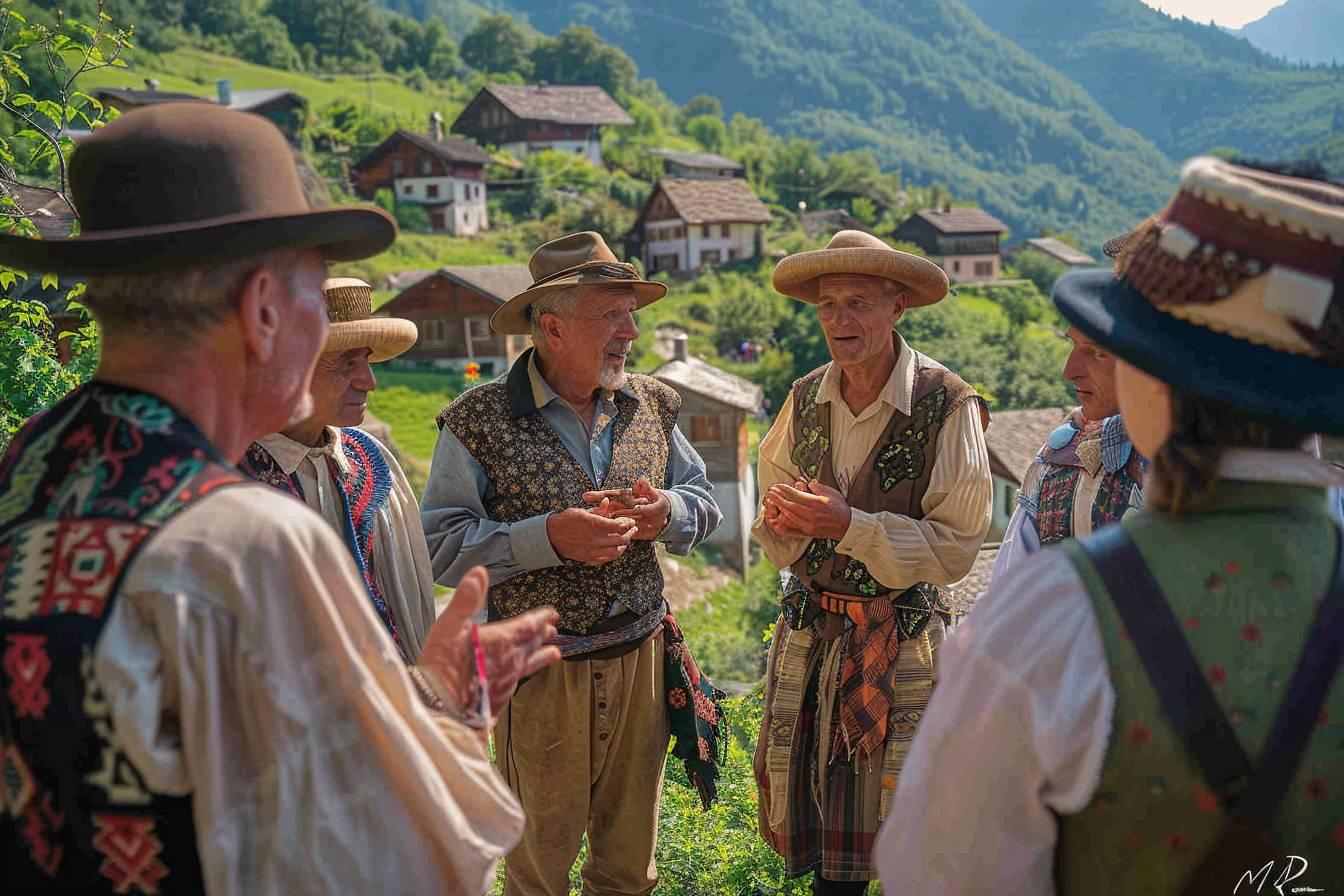
Switzerland’s linguistic diversity offers both enriching opportunities and practical challenges for those who live or travel here. This mosaic of languages has a profound influence on everyday life, education and social interaction in the pays. Whether you are exploring the Jungfraujoch in autumn or working in the financial district of Zurich, understanding which language is dominant in your area will make a real difference.
For visitors, it is advisable to find out about the main language of the region you are visiting. Here are some practical tips:
Standard German (Hochdeutsch) is generally understood in shops and institutions, but Schweizerdeutsch dominates everyday conversation. Learning a few basic phrases in Swiss-German will be appreciated by locals.
French (français) is the primary language of communication. Swiss French shares most vocabulary with standard French, with a few charming regional differences. English is also widely spoken in Geneva due to its international organisations.
Italian is predominant. Visitors from Italy will feel at home, though the local dialect (ticinese) has its own flavour. Destinations like Lugano and Locarno are fully Italian-speaking.
In hubs like Zurich, Geneva or at alpine destinations such as Zermatt and the Jungfraujoch, English serves as a widely accepted lingua franca for international travellers. The myswitzerland official tourism portal publishes content in over 10 languages to welcome visitors worldwide.
For those planning to live and work in Switzerland, fluency in the local language is a major asset. Many swiss companies and federal institutions value multilingualism; the ability to communicate in two or three national languages can be a decisive advantage on the swiss job market. The Swiss public broadcaster SRG SSR, for example, operates four distinct national language services — an homme alone within the Swiss media landscape.
Education in Switzerland also reflects this linguistic diversity. In many cantons, pupils learn a second national language as early as primary school — typically French for German-speaking children, or German for French-speaking ones. Several cantons also introduce English at an early stage, producing graduates who are genuinely trilingual. This approach, rooted in national traditions, aims to promote mutual understanding and social cohesion across the entire Swiss federation.
💡 Notre conseil
Before booking your trip to Switzerland, check the official myswitzerland website or the aboutswitzerland portal (eda.admin.ch) to identify which language is dominant in your target destination. This will help you prepare a few key phrases and navigate more confidently — whether you’re heading to autumn wine festivals in Suisse romande, hiking near the Jungfraujoch, or exploring the vibrant streets of Zurich.
Swiss multilingualism: a unique federal model in Europe
Switzerland’s official multilingualism is unique in Europe and the world. This linguistic model is deeply embedded in Swiss national identity and plays a crucial role in the country’s cohesion — as much a symbole of unity as the red and white drapeau of the Swiss Confederation itself. On 1 août (1er juillet étant la date historique de la charte de 1291), Swiss people of all regions celebrate their nationale fête together, regardless of language.
The Swiss Confederation — as documented extensively on wikipedia and the official eda.admin.ch portal — has developed robust institutional mechanisms to guarantee equality between national languages. Key examples include:
- Federal laws are published in all four official languages simultaneously — no original version takes precedence.
- Parliamentary debates in the Federal Assembly are simultaneously interpreted across all national languages.
- Official federal documents, including those published on dam.eda.admin.ch (the federal document management system), are available in multiple languages.
- The federal government website (admin.ch) and the aboutswitzerland portal are fully multilingual, including English and several other international languages.
- The Swiss drapeau — a red square with a white cross — stands as a shared national symbole that transcends all four linguistic communities.
This official multilingualism strongly encourages individual multilingualism. According to data cited by the Swiss Federal Statistical Office and referenced on wikipedia, many Swiss people are fluent in two or three national languages, which facilitates communication and exchanges between different linguistic regions. In a country where Zurich, Geneva and Lugano are each dominant in a different language, this linguistic agility is an everyday necessity.
The legend of Guillaume Tell — the original Swiss national hero cited in cantonal chronicles — resonates across all four linguistic communities, appearing in German as Wilhelm Tell, in French as Guillaume Tell, and in Italian as Guglielmo Tell, a testament to how one national myth transcends linguistic borders.
The preservation of minority languages, such as Romansh, requires constant and concerted effort. The federal government, through the eda and dedicated cantonal bodies, funds language schools, media outlets (including the Rhaeto-Romance radio service) and cultural programmes to keep Romansh alive. What’s more, the coexistence of several languages can sometimes create communication barriers — particularly in a federal workplace or in national education policy — but Switzerland has consistently found pragmatic solutions that other multi-ethnic states have sought to emulate.
Nature itself seems to reinforce these linguistic boundaries: the Alps physically separate the Italian-speaking south from the German and French north, while the Jura mountains add another layer of natural demarcation. Yet paradoxically, switzerland’s breathtaking nature — from the Jungfraujoch glaciers to the autumn vineyards of the Lavaux (a UNESCO World Heritage Site) — is a shared treasure that unites all Swiss communities. The myswitzerland tourism body celebrates this shared nature in every one of its campaigns, promoting swiss destinations in all four national languages.
⚠️ À garder en tête
Despite the official recognition of four languages, Swiss German dialects (Schweizerdeutsch) are never written in formal contexts — official documents, newspapers and federal communications always use standard written German (Hochdeutsch). Travellers who speak standard German may sometimes struggle to understand spoken Swiss-German in everyday situations in Zurich or other Swiss-German cities.
Despite these challenges, Swiss multilingualism remains one of the most exciting and successful examples of harmonious linguistic diversity in the world. It testifies to a country’s — and a people’s — ability to unite diverse linguistic communities under a common national identity, while fully preserving the cultural particularities and traditions of each region. From the autumn fêtes of Suisse romande to the July celebrations in Zurich, from the peaks of the Jungfraujoch to the sun-drenched piazzas of Lugano, the Swiss spirit shines through — in four languages, with one shared drapeau rouge et blanc.
Questions fréquentes
What is the main language spoken in Switzerland?
German is the most widely spoken language in Switzerland, used by approximately 62.6% of the population. However, Switzerland has four official national languages: German, French, Italian and Romansh. There is no single “main” language at the federal level — all four enjoy equal constitutional status. In practice, German dominates in cantons such as Zurich, Bern and Basel, while French prevails in Geneva and Lausanne, Italian in Ticino, and Romansh in parts of Graubünden.
Is English widely spoken in Switzerland?
English is not an official Swiss language, but it is very widely spoken — especially in major cities like Zurich and Geneva, international institutions, the tourism sector and multinational companies. At popular tourist destinations such as the Jungfraujoch or in Swiss ski resorts, English is routinely used as a common lingua franca. Many Swiss people speak English fluently as a third or fourth language alongside their national languages.
How many official languages does Switzerland have and which cantons speak which language?
Switzerland has four official national languages. German is spoken in cantons including Zurich, Bern, Lucerne, Basel and Aargau. French is dominant in Geneva, Vaud, Neuchâtel, Jura and parts of Fribourg, Valais and Berne. Italian is the primary language in Ticino and some southern valleys of Graubünden. Romansh is spoken in parts of Graubünden. The canton of Graubünden is the only officially trilingual Swiss canton, recognising German, Italian and Romansh simultaneously.
What is Romansh and is it still spoken in Switzerland today?
Romansh is a Romance language of Rhaeto-Romanic origin, descended from spoken Latin brought to the Alps by Roman settlers. It is one of Switzerland’s four official national languages, though spoken by only around 0.5% of the Swiss population — primarily in the canton of Graubünden. Despite its small number of speakers, Romansh is actively protected by federal and cantonal authorities through schools, media and cultural funding. A standardised written form called Rumantsch Grischun was developed in 1982 to unite the five main Romansh dialects.
Do Swiss people need to learn all four national languages?
Swiss people are not required to learn all four national languages, but the education system strongly encourages multilingualism. In most Swiss cantons, pupils begin studying a second national language (typically German or French) in primary school, and many also learn English at an early stage. At the federal level, civil servants working in Berne or within federal institutions are expected to be functional in at least two national languages. Many Swiss citizens naturally become bilingual or trilingual depending on their region and profession.
What language should I use when travelling to Zurich?
Zurich is located in German-speaking Switzerland, so the local language is Swiss German (Schweizerdeutsch) in everyday conversation and standard German (Hochdeutsch) in written and formal contexts. However, English is very widely spoken in Zurich — in hotels, restaurants, shops and transport — making it one of the most accessible Swiss cities for international visitors. A few words of German (such as “Danke” for thank you) are always appreciated by locals.